Parenting Guide

The Power of Labeling Emotions: Why “I See You Are Sad” Works
Contrary to parental instinct, trying to reason with an upset child is neurologically ineffective; the key is to label their feeling, not to fix it. Labeling emotions, a technique known as “affect labeling,” is scientifically shown to calm the brain’s…
Read more
Fostering Emotional Intelligence: The Practical Guide to Raising a Genuinely Kind and Happy Child
Raising a truly kind child goes beyond teaching manners; it involves actively building their brain’s capacity for empathy and emotional regulation. Emotional skills are not fixed traits but trainable abilities that can be developed through specific, playful activities. Understanding the…
Read more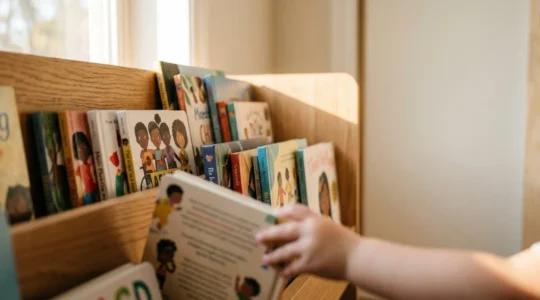
Why Diverse Narratives Matter in Your Child’s Bookshelf
Building a diverse bookshelf is not a social obligation; it’s a powerful, science-backed parenting tool for actively developing your child’s emotional intelligence and resilience. Stories act as “flight simulators” for social life, allowing children to practice empathy and perspective-taking in…
Read more
The Magic of Shared Reading: More Than Just Bedtime Stories
Contrary to the impulse to rush through the bedtime story, its true power lies not in finishing the book, but in the connection you build along the way. Turning reading into a conversation (dialogic reading) boosts language skills far more…
Read more
Emotional Regulation: How to Teach Kids to Calm Down Without Suppressing Their Feelings
Contrary to popular belief, teaching a child to “calm down” isn’t about stopping their emotions; it’s about acting as their external nervous system to help them build their own internal one. Big feelings aren’t a behavioral problem to be punished,…
Read more
Secure Attachment: The Single Greatest Predictor of Your Child’s Future Success
The pressure to be a perfect, ever-present parent is a myth; secure attachment is actually forged in the imperfect, everyday moments of disconnection and repair. It’s not about preventing every tear, but about learning how to reconnect after a tough…
Read more
Building Emotional Resilience in Children: A Psychologist’s Guide to Daily Routines
The core insight: Persistent meltdowns are often not a sign of misbehavior, but a symptom of a child’s nervous system operating in a state of high alert due to unpredictability. Daily routines create “neurological safety,” reducing the cognitive load on…
Read more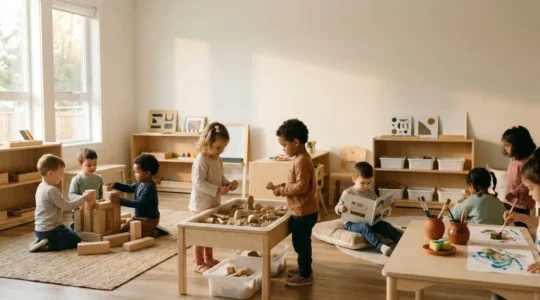
What Are the 7 Areas of Learning in the Early Years Foundation Stage (EYFS)?
Contrary to common belief, the Early Years Foundation Stage (EYFS) is not an academic checklist for toddlers, but a powerful map that reveals the complex learning happening inside everyday play. The framework’s 7 areas are interconnected lenses for observing development,…
Read more