Child Development
Every parent has witnessed those magical moments: a baby’s face lighting up during peek-a-boo, a toddler experimenting with gravity by dropping food repeatedly, or a preschooler lost in elaborate pretend play. These aren’t random behaviors—they’re windows into one of nature’s most sophisticated processes. Child development encompasses the remarkable transformation from helpless newborn to capable, thinking, feeling individual, guided by an intricate interplay of biology, experience, and environment.
Understanding how children develop isn’t just academic knowledge—it’s practical wisdom that transforms everyday parenting. When you recognize that your baby’s “dropping game” is actually a physics experiment, or that your child’s lie signals cognitive advancement rather than moral failure, you shift from frustration to fascination. This comprehensive exploration connects neuroscience, psychology, and real-world application, giving you the foundation to support every dimension of your child’s growth with confidence and insight.
How the Brain Builds Itself: Neuroscience Fundamentals Every Parent Should Know
Your child’s brain is not a miniature adult brain—it’s a dynamic construction site where 700 new neural connections form every second during the first years of life. Understanding this process revolutionizes how you interpret everyday interactions and why seemingly simple moments carry profound developmental weight.
Serve and Return: The Architecture of Brain Building
Think of early interactions as a tennis match. When your baby coos and you respond with eye contact and words, you’re not just being affectionate—you’re literally wiring neural circuits. This serve and return dynamic activates specific brain regions, strengthening the connections that will support everything from language to emotional regulation. A baby who babbles and receives no response experiences a “missed volley” that weakens potential pathways.
The quality matters more than quantity. A caregiver who follows the child’s gaze and comments on what captures their attention (“Yes, that’s a red ball!”) provides richer brain-building material than one who directs attention elsewhere. This principle, called joint attention, teaches children that their interests matter and that communication is a two-way bridge between minds.
Synaptic Pruning: Why “Use It or Lose It” Is Real
By age three, a child’s brain contains twice as many synapses as an adult brain—but this abundance isn’t permanent. Through synaptic pruning, the brain efficiently eliminates connections that aren’t regularly used, strengthening those that are. It’s like a garden: pruning weak branches allows nutrients to flow to the thriving ones.
This explains why repeated experiences matter so profoundly. When you read the same book for the twentieth time or play the same song repeatedly, you’re not indulging a quirk—you’re reinforcing neural pathways that make those skills automatic and robust. The toddler who insists on routine isn’t being rigid; their brain is wisely consolidating learning through repetition.
Building the Executive Brain: Supporting the Prefrontal Cortex
The prefrontal cortex—responsible for planning, impulse control, and decision-making—develops slowly, not fully maturing until the mid-twenties. This biological reality explains why young children struggle with patience, why they melt down when transitions happen abruptly, and why “think before you act” is genuinely difficult advice for a five-year-old to follow.
You support this region’s development through predictable routines, advance warnings before transitions, and games that practice impulse control (“Red Light, Green Light” or “Simon Says”). These aren’t just entertainment—they’re prefrontal cortex workouts that build the neural infrastructure for future self-regulation.
Language and Communication: The Foundation for All Other Learning
Language doesn’t just allow children to express needs—it fundamentally shapes how they think, remember, and understand the world. Children with rich early language exposure demonstrate stronger academic performance, better emotional regulation, and more sophisticated social skills years later.
Sportscasting: Narrating Your Way to Vocabulary Growth
One of the most powerful yet underused language-building techniques is sportscasting—simply describing your actions as you perform them. “I’m washing the red apple under cold water. Now I’m cutting it into four pieces.” This running commentary provides children with vocabulary in meaningful context, connecting words directly to actions and objects they can observe.
Research consistently shows that children’s vocabulary at age three strongly predicts reading comprehension at age ten. The gap isn’t random—it reflects the cumulative effect of thousands of daily language interactions. A child who hears rich, varied vocabulary during everyday routines builds a larger mental dictionary without formal instruction.
Why Following Beats Teaching: The Power of Joint Attention
Paradoxically, following your child’s interest proves more effective for language development than directing their attention to what you want to teach. When you notice your toddler gazing at a bird and you comment on that bird, the word lands in fertile soil—their brain is already activated and focused. Trying to redirect them to learn about something else requires first pulling their attention away, creating resistance rather than receptivity.
This principle extends beyond vocabulary. Children learn best when adults scaffold their existing curiosity rather than imposing external agendas. The child fascinated by wheels will learn counting, colors, and physics through wheel-related play far more readily than through decontextualized flashcards.
Cognitive Growth: Phases, Flexibility, and Focus
Cognitive development follows predictable patterns, yet every child travels this path at their own pace. Understanding the typical milestones helps you provide age-appropriate challenges while respecting individual timelines.
Key Cognitive Phases Between Birth and Age Five
The first five years contain dramatic cognitive leaps. Newborns experience the world primarily through sensation. By eight months, they’ve developed object permanence—understanding that things exist even when hidden, which explains their delight in peek-a-boo. By age two, symbolic thinking emerges, allowing them to use one object to represent another (a cardboard box becomes a spaceship). By four or five, they begin understanding that others hold different beliefs—a milestone called theory of mind.
These aren’t arbitrary stages but reflect underlying brain maturation. Expecting a one-year-old to share generously or a three-year-old to see situations from others’ perspectives sets up frustration because their brains literally haven’t developed those capacities yet.
Cognitive Flexibility: Helping Children Who Get Stuck
Some children demonstrate rigid thinking—insisting the game must follow exact rules, becoming distressed when routines change, or struggling to shift strategies when problems arise. This reflects developing cognitive flexibility, an executive function that allows mental shifting between different ideas or approaches.
You can support flexibility through playful practice: changing rules mid-game, finding multiple uses for everyday objects, or discussing alternative endings to familiar stories. The goal isn’t to eliminate structure (which provides essential security) but to build the mental muscles that allow comfortable adaptation when circumstances require it.
Attention in the Digital Age: Building Focus Capacity
Growing concerns about shortened attention spans reflect real changes in how children consume information. Rapid cuts, instant rewards, and constant novelty can condition brains to expect high stimulation, making sustained focus on slower-paced content genuinely difficult.
Building attention capacity requires deliberate practice with long-form content—chapter books read aloud, extended outdoor exploration, open-ended building projects. Start where the child is (perhaps five minutes of focused activity) and gradually extend duration. Attention is like a muscle; it strengthens with appropriate exercise but weakens without use.
Emotional Intelligence and Social Understanding
Emotional and social development equip children to navigate relationships, manage difficult feelings, and develop empathy—capacities that predict life satisfaction and success as powerfully as cognitive skills.
“Name It to Tame It”: The Neuroscience of Emotional Labeling
When children experience overwhelming emotions, their amygdala (the brain’s alarm system) activates intensely while their prefrontal cortex (reasoning center) goes offline. Simply naming the emotion—”You’re feeling really frustrated right now”—activates language centers that help regulate the amygdala, literally reducing emotional intensity.
This isn’t just validation; it’s neuroscience in action. Children who regularly hear emotions labeled develop larger feeling vocabularies and demonstrate better emotional regulation. Instead of experiencing an undifferentiated storm of “bad feelings,” they can distinguish disappointment from anger, nervousness from excitement—precision that enables more effective coping strategies.
Theory of Mind: Understanding Others Think Differently
Around age four, most children pass classic “false belief” tests, demonstrating they understand others can hold beliefs different from reality or from their own knowledge. This theory of mind is foundational for empathy, cooperation, and navigating social complexity.
You can support this development through perspective-taking conversations: “Grandma doesn’t know we’re planning a surprise. What does she think is happening?” or “Your brother is crying. What do you think he might be feeling?” These discussions build the mental infrastructure for considering others’ internal experiences.
Stories as Empathy Engines: Walking in Others’ Shoes
Reading diverse stories exposing children to characters from different backgrounds, cultures, and experiences literally builds empathy circuits. When children emotionally engage with characters facing unfamiliar challenges, their brains activate similarly to real social interactions. This narrative transportation reduces prejudice and increases prosocial behavior—effects that persist long after the story ends.
The key is emotional engagement, not just exposure. Discussing characters’ feelings, motivations, and choices deepens the impact beyond passive consumption.
The Power of Play: Nature’s Learning Curriculum
Play isn’t frivolous—it’s the primary mechanism through which young children make sense of their world, practice skills, and consolidate learning. Different play types serve distinct developmental purposes.
Why Babies Love Peek-a-Boo and Dropping Games
Infant games that adults find repetitive serve crucial cognitive functions. Peek-a-boo helps babies master object permanence and predict patterns—essential building blocks for logical thinking. The “dropping game” where babies repeatedly throw objects isn’t designed to annoy caregivers; it’s genuine scientific experimentation with gravity, cause-and-effect, and spatial relationships.
When you retrieve the dropped spoon for the fifteenth time, you’re not reinforcing bad behavior—you’re supporting hypothesis testing. The baby is essentially asking, “Does it always fall? Does it make the same sound? What happens if I throw it differently?”
Pretend Play: The Cardboard Box Becomes a Portal
When a child transforms a cardboard box into a rocket ship, they’re demonstrating symbolic thinking—a sophisticated cognitive achievement. Pretend play requires holding two realities simultaneously (it’s a box AND a rocket), planning scenarios, negotiating roles, and solving problems—all higher-order thinking skills.
Children who engage in rich pretend play demonstrate stronger executive function, creativity, and social skills. Rather than interrupting elaborate fantasy scenarios to teach “real” skills, recognize that this play is teaching the most important skills: imagination, flexibility, and collaborative problem-solving.
From Parallel Play to Collaboration: Social Play Development
Toddlers often engage in parallel play—playing near but not truly with other children. This isn’t antisocial behavior; it’s developmentally appropriate. Genuine collaborative play, where children work toward shared goals, negotiate roles, and coordinate actions, typically emerges around age three to four.
Role-play scenarios (“Who gets to be the doctor?”) provide natural opportunities to practice negotiation, compromise, and perspective-taking. Adult facilitation helps: “You both want to be the doctor. How could you solve this?” rather than imposing solutions.
The Comfort and Learning in Repetition
When your child requests the same book, song, or game endlessly, they’re not stuck—they’re engaging in deep learning. Repetition allows children to move from effortful processing to automaticity, freeing cognitive resources for noticing new details. The twentieth reading of a favorite book reveals nuances invisible during the first encounter.
Repetition also provides emotional comfort in an overwhelming world. Knowing what comes next creates a safe space for exploring variations and deeper understanding.
Physical Development: Motor Skills and Embodied Learning
Physical development intertwines with cognitive and emotional growth—movement literally builds brains, and bodily competence shapes self-concept and confidence.
Fine Motor Skills: The Building Blocks of Independence
Fine motor control—the precise movements of hands and fingers—develops gradually from infancy through school age. These skills enable self-care (buttoning, feeding), academic tasks (writing), and creative expression (drawing, building). Each successful manipulation strengthens neural pathways connecting brain regions responsible for motor planning, sensory feedback, and spatial reasoning.
Supporting fine motor development doesn’t require expensive toys. Everyday activities provide rich practice opportunities:
- Pouring water between containers (hand-eye coordination and control)
- Using tongs or tweezers to pick up small objects (pincer grip strength)
- Rolling playdough or clay (hand strength and bilateral coordination)
- Threading beads or pasta (precision and planning)
Outdoor Exploration: Why Children Need Risk and Nature
Climbing trees, jumping from heights, and getting muddy aren’t just fun—they’re essential for developing proprioception (body awareness in space), risk assessment, and resilience. Children who regularly engage in active outdoor play demonstrate better motor coordination, stronger bones, and paradoxically fewer serious injuries because they’ve learned to assess and manage physical challenges.
Natural environments provide uniquely beneficial learning contexts. Unlike structured playgrounds with predetermined uses, nature offers open-ended materials (sticks, rocks, water) that invite creativity, problem-solving, and sustained attention. Studies consistently show that outdoor time reduces stress, improves focus, and supports overall wellbeing.
Developmental “Mistakes” That Signal Growth
Many behaviors that concern parents actually represent cognitive advancement rather than problems requiring correction. Recognizing developmental progress hidden in apparent misbehavior transforms your response from correction to celebration.
When your child tells their first deliberate lie, it’s actually a cognitive milestone—they’ve developed theory of mind sophisticated enough to understand that others don’t have access to their knowledge. Rather than purely a moral issue, lying requires impressive mental gymnastics: holding two versions of reality, predicting others’ reactions, and attempting to manage information flow.
Similarly, the “terrible twos” stubbornness reflects emerging autonomy and self-concept—your child is discovering they’re a separate person with preferences and power. The challenge is channeling this developmental necessity constructively rather than entering power struggles that benefit no one.
Understanding the developmental logic behind challenging behaviors doesn’t mean accepting all behavior without boundaries. It means setting limits with compassion, recognizing that your child isn’t defective—they’re developing exactly as nature designed, sometimes messily and inconveniently, but always purposefully.
Child development isn’t a checklist to anxiously monitor but a journey to understand and support. When you grasp the science behind your child’s behaviors—why they crave repetition, how their brain builds itself through interactions, why play is serious work—you gain both patience and precision. Every interaction becomes an opportunity, not an obligation. You’re not just raising a child; you’re partnering with biology’s most remarkable process, one serve-and-return exchange, one story, one muddy adventure at a time.

Outdoor Exploration: Why Kids Need to Climb Trees and Get Muddy?
Wrapping children in safety bubble wrap doesn’t protect them; it prevents them from developing essential risk-assessment and resilience skills. Calculated ‘risky’ play is a powerful cognitive workout that trains the brain’s executive functions, improving memory and problem-solving. Exposure to dirt…
Read more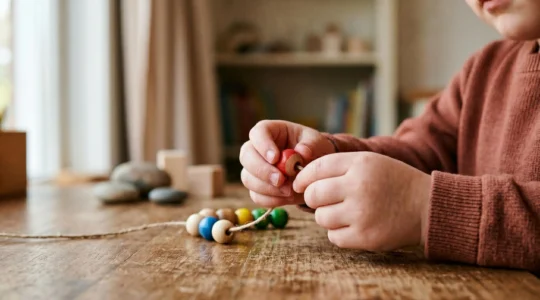
Fine Motor Skills: The Building Blocks of Independence
Struggling with your child’s buttons and zippers is a sign they need more than just generic play; they need targeted activities to build foundational motor pathways for independence. Focus on “scaffolded” activities that progress from simple to complex, like moving…
Read more
Attention Spans in the TikTok Era: Helping Kids Focus on Long-Form Content
Contrary to common belief, the solution to a child’s fragmented attention isn’t just limiting screen time, but actively retraining their brain for deep focus. Short-form video apps are engineered as “dopamine machines” that create a neurological craving for constant, rapid…
Read more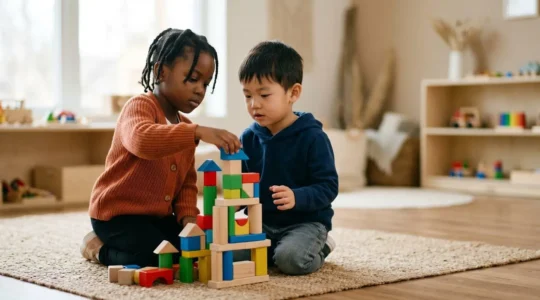
Collaborative Play: Moving From Parallel Play to Teamwork
Contrary to popular belief, teaching teamwork isn’t about forcing kids to share or just giving them more toys; it’s about coaching the hidden ‘social syntax’ of collaboration. Parallel play is a normal developmental stage, not a social deficit. The transition…
Read more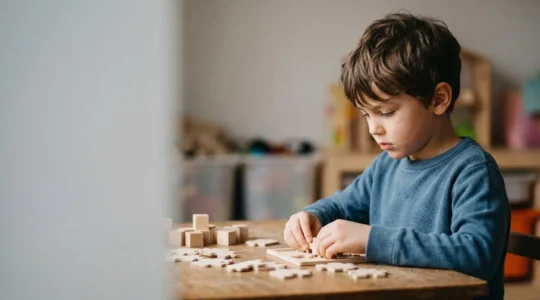
Beyond ‘Just Focus’: A Parent’s Guide to Building Real Concentration in a Distracted World
The common belief that children just need to ‘try harder’ to focus is a myth; true concentration is a skill built by addressing underlying neurological and environmental needs. Visual clutter and high-glycemic foods actively sabotage a child’s working memory and…
Read more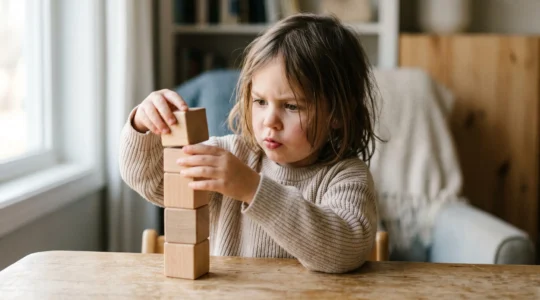
How to Support the Development of the Prefrontal Cortex in Young Children?
The key to raising a focused, adaptable child isn’t found in discipline, but in acting as a “cognitive coach” who intentionally builds their prefrontal cortex through daily interactions. Simple games like “Simon Says” are powerful workouts for your child’s working…
Read more
What Is Synaptic Pruning and Why Is “Use It or Lose It” Real?
Contrary to the belief that effective parenting means cramming more activities into a child’s life, neuroscience shows the opposite is often true. The brain’s peak performance is achieved through a process of “pruning”—systematically eliminating weaker neural connections to strengthen the…
Read more
How Do Repeated Experiences Wire Your Child’s Neural Circuits?
Repeated experiences are the single most important factor in building a robust and efficient brain architecture in early childhood. Repetition creates permanent, high-speed neural pathways through a biological process called myelination, physically strengthening connections. Mistakes and sleep are not obstacles…
Read more
How Does Understanding Neuroscience Change the Way You Parent?
Parenting isn’t a set of behavioral rules, but the process of actively sculpting a physical organ—the brain. Understanding the biological mechanisms behind your child’s behavior empowers you to move beyond generic advice. This guide reveals how core concepts like brain…
Read more
Decoding Your Child’s Genius: The Hidden Meaning in Cognitive Milestones from Birth to Age 5
Many parents worry about tracking cognitive milestones, fearing their child is “behind.” The truth is, these checklists often miss the genius hidden in plain sight. Repetitive games like Peek-a-Boo and “the dropping game” are not random; they are sophisticated cognitive…
Read more