Learning & Teaching
The early years of childhood represent an extraordinary window of opportunity for learning. During this time, a child’s brain forms over one million neural connections per second, creating the foundation for all future learning, behavior, and health. Yet effective teaching for young children looks nothing like traditional classroom instruction. Instead, it happens through play, conversation, everyday routines, and carefully designed activities that feel like fun rather than formal lessons.
This comprehensive resource explores the key domains of early childhood learning and teaching, offering parents and caregivers practical, research-informed strategies to support children’s development at home. From building literacy skills and scientific thinking to nurturing emotional intelligence and fine motor control, you’ll discover how ordinary moments can become powerful learning opportunities.
Whether you’re preparing your toddler for preschool, supporting your preschooler’s growing curiosity, or simply looking to enrich your child’s daily experiences, the methods outlined here will help you become your child’s most effective first teacher.
Building Early Literacy and Language Skills
Literacy development begins long before a child can read their first word. The foundation is built through exposure to language, sounds, stories, and print in everyday contexts. Understanding how to nurture these pre-literacy skills can dramatically impact your child’s future reading success and overall academic achievement.
Phonological Awareness and Pre-Reading
Phonological awareness—the ability to hear and manipulate sounds in words—is one of the strongest predictors of reading success. Activities like nursery rhymes, I-Spy sound games, and rhyming word play help children recognize that words are made of smaller sound units, a crucial skill for eventual decoding.
Environmental print, such as recognizing logos on cereal boxes or reading street signs during walks, helps children understand that print carries meaning. This casual exposure to reading in context makes literacy feel purposeful and relevant rather than abstract.
Interactive Reading Techniques
Traditional storytime involves reading to children; effective literacy instruction involves reading with them. Dialogic reading transforms passive listening into active conversation by asking open-ended questions, expanding on children’s responses, and encouraging them to predict what happens next.
Wordless picture books offer particularly rich opportunities for building narrative skills. Without text to rely on, children practice sequencing events, inferring emotions from illustrations, and constructing coherent stories—all critical comprehension skills.
Natural Language Development
Language acquisition flourishes in responsive, conversational environments. The “add one word” technique—repeating what your child says while adding just one additional word—stretches their vocabulary and grammar naturally without correction or pressure.
Recasting, where you reformulate a child’s grammatically incorrect statement into proper form without calling attention to the error, allows learning without shame. When your toddler says “I goed park,” you might respond, “Yes, you went to the park! What did you see?” This provides the correct model while validating their communication attempt.
Introducing STEM and Scientific Thinking
Young children are natural scientists, constantly experimenting with their environment and testing hypotheses. Harnessing this innate curiosity and adding just a bit of structure can teach genuine scientific reasoning skills that will serve them throughout their education.
Hands-On Experiments
Simple kitchen experiments like “sink or float” or ice rescue challenges introduce the scientific method through play. The key is encouraging children to predict outcomes before testing, observe carefully during the experiment, and reflect on results afterward.
Water play teaches conservation of volume when children pour liquid between differently shaped containers. Block engineering demonstrates physics principles as towers fall and children experiment with stability and balance. These aren’t just play activities—they’re physics and engineering lessons disguised as fun.
Mathematical and Logical Reasoning
Early mathematical thinking extends far beyond counting. Pattern recognition, sorting by multiple attributes (like creating Venn diagrams with toy cars sorted by color and type), and understanding one-to-one correspondence all build the cognitive foundation for formal mathematics.
The “fair test” concept—changing only one variable at a time—teaches experimental design even to preschoolers. When testing what melts ice fastest, using the same amount of ice, the same container, and changing only whether you add salt, sugar, or hot water demonstrates controlled experimentation that mirrors professional scientific methodology.
Developing Emotional Intelligence and Social Skills
Academic skills alone don’t create successful learners. Children also need robust emotional intelligence: the ability to recognize, understand, and manage their own emotions while navigating social relationships with empathy and skill.
Emotional Vocabulary and Expression
Most young children can identify “happy,” “sad,” and “angry,” but emotional literacy requires a much richer vocabulary. Teaching nuanced words like “frustrated,” “disappointed,” “proud,” or “embarrassed” gives children precise tools to understand and communicate their internal experiences.
Bibliotherapy—using books that name and explore various emotions—provides safe opportunities to discuss feelings. When characters experience jealousy, fear, or excitement, children can reflect on these emotions without the intensity of experiencing them in the moment.
Growth Mindset and Encouragement
How you respond to your child’s efforts shapes their relationship with challenge and failure. Praising effort rather than intelligence (“You worked so hard on that puzzle” vs. “You’re so smart”) cultivates a growth mindset, teaching children that abilities develop through practice rather than being fixed traits.
Encouragement focuses on the process and acknowledges specific actions, while generic praise can actually undermine motivation. Role-playing social scenarios through “What would you do if…?” questions helps children mentally rehearse social problem-solving before encountering challenging situations.
Playful Learning Through Daily Routines
Some of the richest learning opportunities don’t require special materials or dedicated lesson time—they’re embedded in the routines you already complete every day. Playful learning transforms mundane tasks into discovery adventures.
Cooking together offers organic opportunities for kitchen math: measuring ingredients, weighing items, counting quantities, and observing transformations as heat changes batter into cake. The grocery store becomes a literacy lesson as children help read shopping lists and find items by recognizing packaging and words.
Even laundry can teach physics when transformed into laundry basketball, where children experiment with trajectory and force while tossing socks into baskets from varying distances. These activities require no additional time investment—just a shift in perspective that recognizes learning potential in everyday moments.
Fine Motor Skills and Creative Expression
The small muscles in children’s hands need significant development before they’re ready for the precision demands of handwriting. Creative arts and hands-on activities build this dexterity while offering rich sensory experiences and creative outlets.
Hand Strengthening Activities
The pincer grasp—using thumb and forefinger together—is essential for pencil control. Activities like picking up beads with tweezers, peeling stickers, using pipettes to transfer colored water, or manipulating playdough all strengthen the specific muscles children will later use for writing.
“Dough gym” exercises—rolling, pinching, poking, and squeezing playdough—build hand strength and control. Scissor skills progress developmentally from simple snips to cutting lines and eventually complex shapes, requiring direct teaching of proper grip and technique.
Process Over Product
Process art focuses on the experience of creating rather than producing a recognizable final product. Finger painting, shaving foam tracing, or mixing primary colors to discover secondary colors all offer valuable sensory input and creative exploration.
When children engage in sensory art without worrying about making something “correct” or refrigerator-worthy, they develop creative confidence, experiment freely, and build fine motor skills without performance pressure. The messy, open-ended experience delivers more developmental value than any perfectly executed craft template.
Games, Puzzles, and Strategic Thinking
Educational games and logic puzzles offer structured opportunities to practice specific cognitive skills while maintaining the motivation and engagement that comes from play. Board games, in particular, deliver remarkable learning value disguised as family fun.
Simple games teach foundational concepts: Snakes and Ladders reinforces one-to-one correspondence and counting on. Monopoly Junior introduces money concepts and basic arithmetic. Guess Who builds descriptive vocabulary and systematic elimination strategies.
Strategy games like Noughts and Crosses (Tic-Tac-Toe) or Connect Four teach children to think ahead, consider their opponent’s likely moves, and plan multi-step strategies. These cognitive skills—looking before you leap—transfer to academic problem-solving and life decision-making far beyond the game board.
Memory games like Kim’s Game (removing one object from a collection and asking what’s missing) or story sequencing activities strengthen recall abilities. The Waiter Game, where children must remember multiple “orders,” builds working memory capacity essential for following multi-step instructions in school settings.
Supporting Focus and Attention
The ability to sustain attention on a single task is not innate—it develops gradually and requires both practice and appropriate support. Understanding how attention works can help you create conditions that support concentration rather than fighting against developmental realities.
Counterintuitively, some children actually need movement to focus. Fidgeting or engaging in “heavy work” (carrying weighted objects, pushing, pulling) can provide the sensory input that helps certain nervous systems regulate and attend to cognitive tasks.
Focus training involves gradually increasing the time children spend on single tasks without interruption. The Pomodoro technique, adapted for young children with visual timers, teaches them to work in focused bursts appropriate to their developmental capacity, typically just a few minutes for preschoolers.
When selecting educational apps, curriculum alignment and design for deep engagement matter far more than flashy graphics or celebrity endorsements. Effective apps encourage active problem-solving rather than passive consumption and support skills children are developing in other contexts.
Exploring Nature and Biology Concepts
The natural world offers an accessible, endlessly fascinating laboratory for teaching biology concepts. Young children can grasp surprisingly sophisticated scientific ideas when presented through direct observation and hands-on exploration.
Watching a caterpillar transform into a butterfly makes metamorphosis concrete rather than abstract. Observing which garden creatures eat which others introduces predator-prey relationships and food webs. Examining plant parts and discussing their functions teaches botanical anatomy and plant life cycles.
Seasonal changes offer recurring opportunities for scientific observation: Why do deciduous trees lose leaves in autumn? Where do insects go in winter? These questions lead to discussions of dormancy, adaptation, and survival strategies that represent genuine biological concepts accessible to preschool minds.
The goal isn’t memorizing scientific terminology but developing observational skills, asking questions, noticing patterns, and understanding that the natural world operates according to discoverable principles. This foundation of scientific curiosity and systematic observation will support all future STEM learning.
Effective teaching in early childhood doesn’t require expensive materials, formal training, or dedicated lesson time. It requires recognizing learning opportunities in everyday moments, responding to children’s questions with curiosity rather than quick answers, and creating environments where exploration feels safe and exciting. By integrating these strategies into your daily routines, you transform ordinary parenting into powerful teaching—and give your child tools that will serve them for a lifetime.
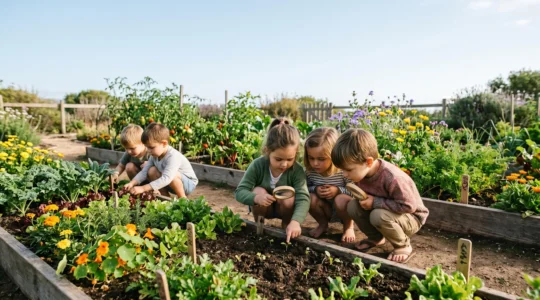
Biology Concepts for Preschoolers: Learning About Life in the Garden
In summary: Transform your garden into a living laboratory to answer your child’s “why” questions about nature. Focus on hands-on investigation and observation rather than just giving factual answers. Use simple tools like journals and magnifying glasses to become “biology…
Read more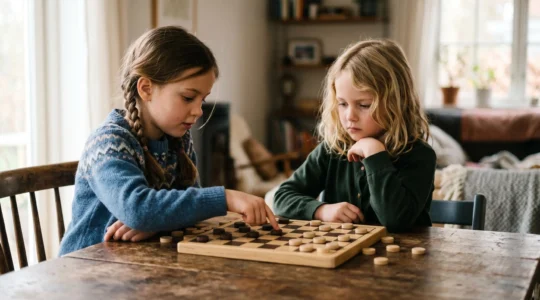
Strategic Thinking for Kids: Teaching Them to Look Before They Leap
To curb impulsivity, stop telling your child to “think ahead” and start training their brain like a chess master. Impulsive actions often stem from a still-developing prefrontal cortex, not a lack of willingness to listen. Simple board games are the…
Read more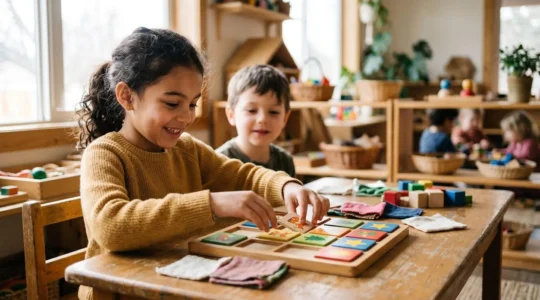
Memory Challenges: Fun Ways to Boost Your Child’s Recall Ability
Contrary to popular belief, the key to improving your child’s memory isn’t just playing more games—it’s about becoming a cognitive coach who understands *how* each game trains specific mental muscles. Simple games like “Kim’s Game” and “Simon Says” are powerful…
Read more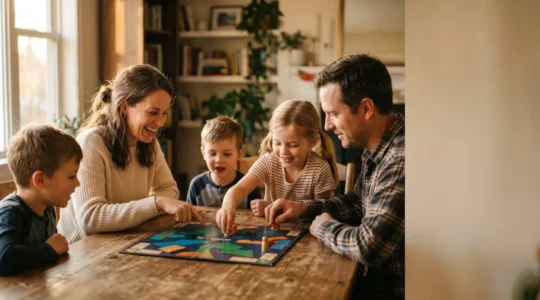
Board Games for Skills: Why Family Game Night Is a Learning Lab
Beyond simple fun, board games are structured learning environments that actively build your child’s cognitive, social, and emotional skills with every roll of the dice. Game mechanics are a hidden curriculum, teaching everything from numeracy and financial literacy to logical…
Read more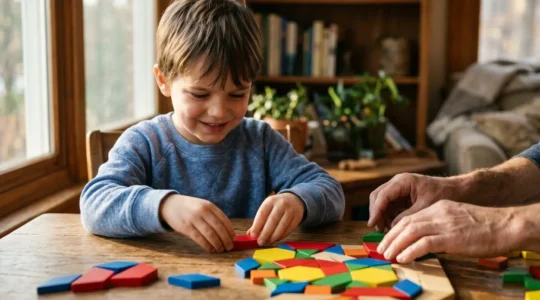
Educational Games and Logic Puzzles: Brain Training That Feels Like Play
The most effective educational games aren’t just ‘fun alternatives’ to screens; they are targeted workouts for specific executive functions like logic, memory, and focus. Classic games like Simon Says are powerful tools for training working memory and inhibitory control simultaneously….
Read more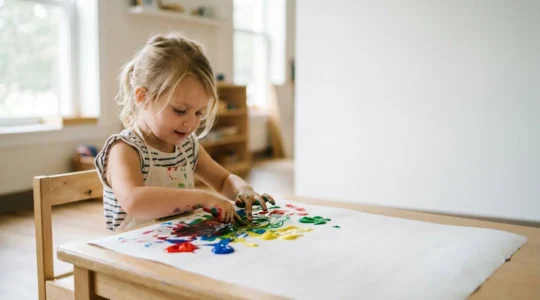
Beyond the Mess: How Targeted ‘Art’ Builds the Motor Skills for Writing
In summary: An occupational therapist’s view reveals that the benefits of messy play come from specific hand movements, not the mess itself. These crucial pre-writing skills can be developed through targeted, low-mess activities that function like a ‘gym for the…
Read more
Playful Learning: How to Turn Daily Life into a Discovery Adventure
The secret to nurturing a brilliant mind isn’t in scheduled lessons, but in unlocking the hidden learning potential of everyday life. Everyday chores and routines are rich environments for developing foundational skills in math, literacy, and science. The parent’s role…
Read more
Are Educational Apps Really Educational? How to Choose the Best Ones
The “Educational” label on an app is often a marketing tactic; the key is to shift from seeking content-delivery apps to choosing tools that foster active creation and critical thinking. Most “free” educational apps monetize your child’s attention through disruptive…
Read more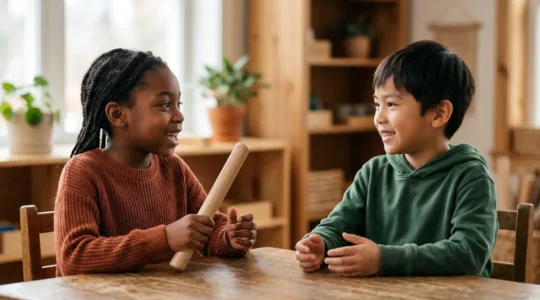
Developing Social Interaction Skills Through Role Play and Conversation
Teaching conversation isn’t about memorizing abstract social rules; it’s about rehearsing a performance where your child feels confident and prepared. Physical tools (like a “talking stick”) are props that build the crucial cognitive skills needed for conversational turn-taking. Connection is…
Read more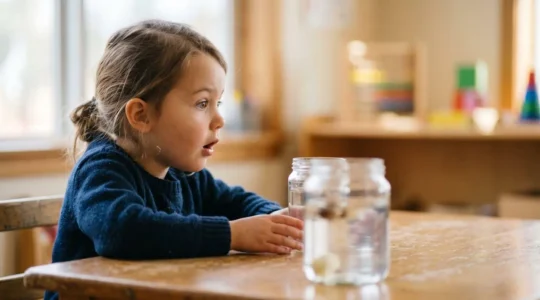
Hypothesis Testing: Turning “I Don’t Know” into “Let’s Find Out”
Fostering critical thinking isn’t about having more creative toys or a list of ‘fun’ activities. Many parents focus on the ‘what’ of science experiments, missing the real lesson. The key is to shift from being an entertainer to an ‘inquiry…
Read more