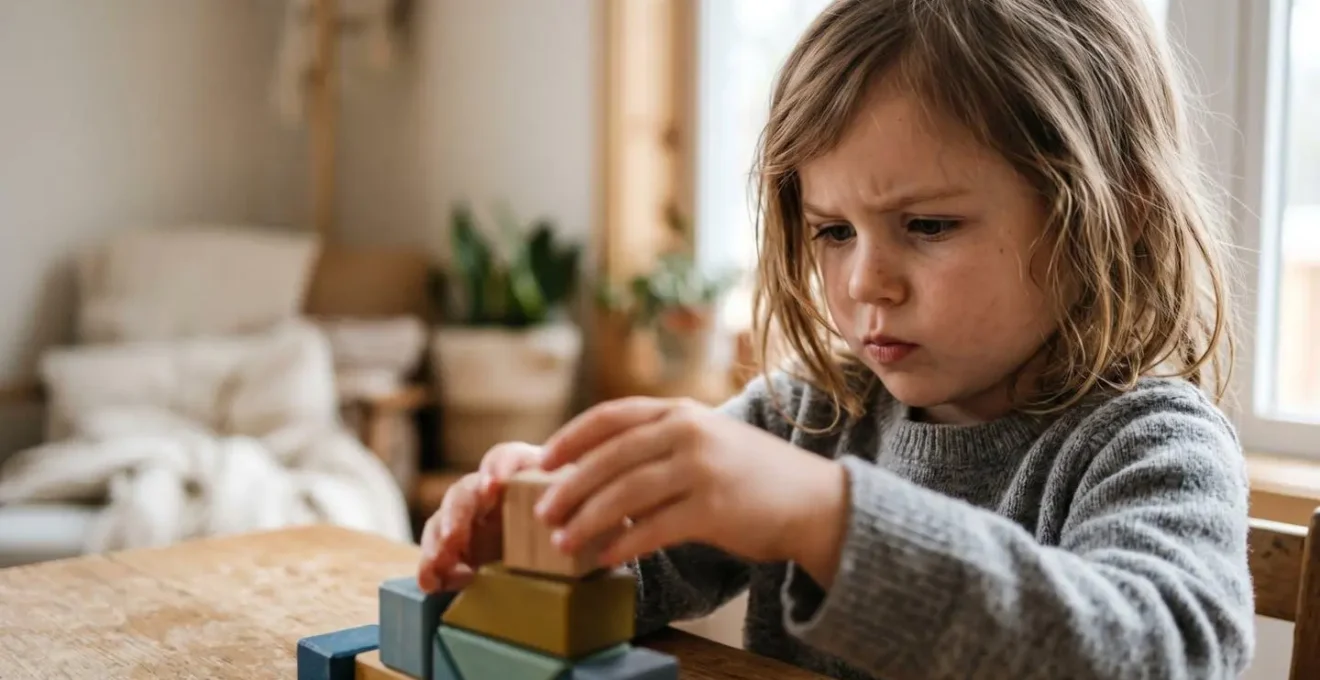
Repeated experiences are the single most important factor in building a robust and efficient brain architecture in early childhood.
- Repetition creates permanent, high-speed neural pathways through a biological process called myelination, physically strengthening connections.
- Mistakes and sleep are not obstacles but essential parts of the brain’s learning algorithm, used for refining circuits and consolidating skills.
Recommendation: Focus on joyful, play-based repetition of core skills rather than a constant stream of new, “educational” stimuli to build a truly resilient and agile mind.
If you’re a parent, you know the script. The same bedtime story, night after night. The same song on repeat in the car. The relentless request to “watch me!” as your child attempts the same jump for the fortieth time. This endless cycle of repetition can test the limits of adult patience, often leading us to wonder if our child is stuck in a loop. We’re told that “practice makes perfect” and that a “stimulating environment” is crucial, but these phrases barely scratch the surface of the profound neurological event unfolding in your child’s mind.
The truth is, this repetitive behaviour isn’t a quirk; it’s a biological imperative. It is the very process by which the brain builds itself. Far from being a passive sponge, a child’s brain is an active construction site. Each repeated action, thought, or experience is like a worker treading the same path over and over, gradually turning a muddy trail into a paved, multi-lane superhighway. Understanding this process moves us beyond simply tolerating repetition and into actively engineering opportunities for the brain to build its most critical infrastructure.
This article demystifies the neuroscience behind your child’s repetitive drive. We will move beyond platitudes to explore the actual mechanisms of neural wiring. We will dissect how the brain learns a physical skill, investigate the reality of rewiring bad habits, and contrast the value of structured toys with open-ended play. By understanding the “why” behind the wiring, you can provide the most effective support for building a strong, flexible, and resilient young mind.
This article delves into the core mechanics of how your child’s brain learns and grows. Below is a summary of the key areas we will explore, from the fundamental power of repetition to the practical ways you can support healthy brain development.
Summary: The Neurological Blueprint of Childhood Learning
- Repetition: Why Does Your Child Want the Same Book 50 Times?
- Muscle Memory: How Does the Brain Learn to Ride a Bike?
- Rewiring: Can You Change Neural Pathways After Bad Habits Form?
- Enriched Environments: Do Fancy Toys Build Better Circuits Than Mud?
- Screen Time and Wiring: Does Passive Viewing Weaken Neural Connections?
- Simon Says: Why Classic Games Build Working Memory?
- The Same Book Again: Why Repetition Comforts and Teaches?
- How to Support the Development of the Prefrontal Cortex in Young Children?
Repetition: Why Does Your Child Want the Same Book 50 Times?
The request for the same book isn’t a sign of a limited imagination; it’s the sign of a brain hard at work. In the first few years of life, the brain is undergoing its most rapid period of development, with research showing that more than 90% of brain development happens before age 5. This development is the physical creation of neural circuits, and repetition is the primary construction method. Each time your child hears the story, their brain isn’t just passively listening. It’s predicting the next word, solidifying vocabulary, recognizing emotional arcs, and strengthening the auditory processing pathways.
Think of a new neural pathway as a faint trail in a dense forest. The first time an experience happens, the trail is barely visible. The second time, it’s a little clearer. After dozens of repetitions, the trail becomes a well-worn path, easy and efficient to travel. This efficiency is the goal. The brain is wiring itself for automaticity so that it doesn’t have to expend enormous cognitive energy on basic tasks. That storybook becomes a comfortable, low-effort environment where the brain can focus on mastering finer details with each “read.”
This process can be dramatically accelerated. As Dr. Karyn Purvis noted, the number of repetitions needed to form a new brain connection plummets when learning is fun. It’s a powerful reminder that joyful engagement is a neurological catalyst. According to GESS Education, this is a cornerstone of modern educational neuroscience.
Scientists have discovered that it takes approximately 400 repetitions to create a new synapse in the brain, unless it is done in play, in which case it only takes 10 to 20 repetitions.
– Dr. Karyn Purvis, GESS Education – The Importance of Integrating Neuroscience into Early Childhood Education
Therefore, when your child asks for “again!”, they are instinctively seeking the exact input their brain needs to build a permanent, efficient connection. They are not just learning a story; they are mastering the process of learning itself.
Muscle Memory: How Does the Brain Learn to Ride a Bike?
Learning to ride a bike is a rite of passage that perfectly illustrates the brain’s creation of procedural memory, often called muscle memory. This isn’t memory in the muscles themselves, but rather the encoding of a complex motor sequence deep within the brain, primarily in the cerebellum and basal ganglia. Initially, the prefrontal cortex is heavily involved—the child is consciously thinking, “Okay, push the pedal, steer, don’t fall!” This is slow, clumsy, and requires immense concentration.
With each attempt, a fascinating process unfolds. A 2023 computational neuroscience study explains that the brain uses an “error-correction loop.” When the bike wobbles (an error), the cerebellum makes micro-adjustments to balance and aim. The basal ganglia learns the overall sequence of pedaling and steering. Repetition strengthens this circuit, and with each successful correction, the pathway becomes more defined. Gradually, the conscious effort from the prefrontal cortex fades away, and the action becomes automatic. The child can now ride and talk or look around, because the “bike riding” program is running on a dedicated, efficient circuit, freeing up cognitive resources.
This process of solidifying the new skill, known as consolidation, doesn’t just happen during practice. It happens profoundly during sleep. The brain is not “off” when a child sleeps; it’s actively reviewing and strengthening the day’s learning.
This consolidation is not a passive process. A landmark 2014 PLOS One study on motor learning in children demonstrated this clearly. Children who slept after learning a motor task showed significantly better skill retention and improvement than those who didn’t. During specific sleep stages, the brain replays the motor patterns, reinforcing the neural pathways without any physical movement, effectively practicing in its sleep.
Rewiring: Can You Change Neural Pathways After Bad Habits Form?
Yes, absolutely. The same principle that forms habits—”neurons that fire together, wire together”—is the key to changing them. A child’s brain is characterized by an extraordinary level of neuroplasticity, its ability to reorganize and form new connections in response to experience. This makes the young brain uniquely adaptable, but it also means that undesirable pathways, or “bad habits,” can become entrenched just as easily as good ones.
Think of a bad habit, like a toddler hitting when frustrated, as a well-established neural superhighway. The frustration trigger leads directly and rapidly to the hitting action. The pathway is fast and efficient. To change this, you cannot simply will the old pathway away. Instead, you must build a new, alternative superhighway that is more appealing and rewarding. This involves consciously and consistently practicing a different response—for example, “When I’m mad, I stomp my feet” or “I use my words.”
Each time the child successfully redirects the impulse from hitting to the new behavior, they are sending traffic down the new, smaller path. At first, it requires significant effort from the prefrontal cortex (the brain’s executive control center) to override the old habit. But with repetition, the new pathway strengthens. The connections physically change, becoming faster and more automatic. As one research team puts it, this is a physical transformation.
Repetition transforms neural pathways from temporary to permanent. The connections that fire together, wire together.
– Edquisitive Montessori Research Team, The Science of Child-Led Learning: Why Curiosity Builds Better Brains
Simultaneously, the old, unused “hitting” pathway begins to weaken through a process called synaptic pruning. The brain is ruthlessly efficient; connections that are not used are eventually dismantled to conserve energy and resources. Therefore, changing a habit is a dual process: actively building a new, desired pathway through repetition while systematically starving the old pathway of use.
Enriched Environments: Do Fancy Toys Build Better Circuits Than Mud?
The term “enriched environment” has been co-opted by the toy industry to sell parents on the idea that more—more colors, more sounds, more functions—is better for brain development. The neuroscience, however, points in a different direction. While a stimulating environment is crucial, “stimulating” does not mean “bombarding with pre-programmed stimuli.” In fact, the opposite is often more effective. A pile of mud, a set of plain wooden blocks, or a collection of sticks and stones offers something most “smart” toys cannot: divergent possibilities.
A fancy electronic toy has a specific function. You push a button, it plays a song. The circuit is: see button -> push button -> get reward. It’s a closed loop that requires little creativity. Mud, on the other hand, can be a pie, a wall, a sculpture, or just a sensory experience. It engages multiple senses and demands that the child’s brain create the plan, execute it, and adapt. This open-ended play builds flexible problem-solving circuits, not just a single, rigid pathway.
More importantly, simple, natural materials create the perfect context for the brain’s most powerful learning tool: the error-correction loop. When a tower of smooth stones collapses, the child doesn’t just see failure; their brain registers a data point. The base was too narrow, the top stone was too heavy. This feedback is neurologically essential.
As experts in child-led learning emphasize, this process is what builds true resilience. A brain that has only experienced success from pushing the right button is brittle. A brain that has learned to adapt and try again after a pile of mud collapses is robust and antifragile.
Neurologically speaking, failure is the essential ingredient for building a robust, adaptive brain. When your child tries something, doesn’t quite get it right, observes what went wrong, and tries again — that failure loop is building resilience at the neurological level.
– Edquisitive Montessori Research Team, The Science of Child-Led Learning
Screen Time and Wiring: Does Passive Viewing Weaken Neural Connections?
The debate around screen time is often oversimplified to “good” versus “bad.” A more useful framework from a neuroscience perspective is “active” versus “passive” engagement. The critical question is not just *what* the child is watching, but *what their brain is doing* while they watch. Passive viewing, characteristic of many traditional cartoons and fast-paced shows, presents a unique challenge to a young, developing brain.
The primary issue is cognitive load. A young child’s working memory—the mental “scratchpad” where we hold and manipulate information—is extremely limited. Developmental research shows that a three-year-old can typically hold only one or two pieces of information in mind at once, compared to the four to seven items an adult can manage. Many television programs designed for children feature rapid scene changes, multiple characters talking at once, and a constant stream of new visual and auditory information. This firehose of data can easily overwhelm a child’s limited working memory capacity.
When cognitive load is too high, deep processing cannot occur. The brain is so busy just trying to keep up with the torrent of input that it has no resources left to connect new information to existing knowledge, form predictions, or build stable neural pathways. The experience is “watched” but not integrated. In contrast, active screen time—such as a video call with a grandparent, using a creative drawing app, or watching a slow-paced educational program that pauses for questions—demands engagement. It requires the child to respond, predict, and think, thus exercising and strengthening neural circuits rather than just letting information wash over them.
Therefore, passive viewing doesn’t so much “weaken” existing connections as it represents a missed opportunity to “strengthen” them. It’s the neurological equivalent of empty calories. It occupies time and brain space but provides little of the rich, repetitive, and interactive input needed for robust circuit construction. The key is to shift the balance from passive consumption to active creation and interaction, whether on a screen or off.
Simon Says: Why Classic Games Build Working Memory?
Classic games like “Simon Says” or “I Spy” are far more than simple pastimes; they are powerful neurological workouts disguised as fun. Their effectiveness lies in how they precisely target and train core executive functions, particularly working memory and inhibitory control. These functions, seated in the prefrontal cortex, are the building blocks of higher-level thinking, planning, and self-regulation.
In “Simon Says,” a child must hold a command in their working memory (e.g., “touch your nose”) while simultaneously engaging their inhibitory control to check if the prerequisite phrase “Simon says” was used. If it wasn’t, they must inhibit the practiced, automatic impulse to perform the action. This constant toggling between acting and inhibiting is a strenuous exercise for the prefrontal cortex. Each round strengthens the circuits responsible for pausing and thinking before acting—a skill essential for academic success and social interaction.
The repetitive nature of these games is also crucial for physically building a faster brain. The repeated firing of these neural pathways triggers the production of myelin, a fatty substance that wraps around nerve fibers (axons). Myelin acts like the insulation on an electrical wire, preventing signal leakage and allowing nerve impulses to travel exponentially faster and more efficiently. Neuroscience research demonstrates that repetition increases the production of myelin, effectively turning a bumpy country road of a neural pathway into a high-speed expressway.
This process of making skills automatic is a primary goal of the brain. When a skill becomes myelinated and automatic, it consumes fewer cognitive resources. This frees up the brain’s limited processing power to focus on learning new, more complex things. So, while it may just look like a game, “Simon Says” is literally helping to construct a more efficient, flexible, and powerful cognitive machine.
The Same Book Again: Why Repetition Comforts and Teaches?
While we’ve explored the cognitive benefits of repetition for learning, there is a powerful emotional dimension that is just as important for a child’s development. The drive for repetition is not just about mastering skills; it’s about creating a sense of safety and predictability in a world that can often feel overwhelming and chaotic. For a young child, the world is a constant stream of new experiences. A predictable routine or a familiar story acts as a safe harbor.
This need for predictability has a deep neurological basis. The London School of Childcare Studies highlights that when a child can anticipate what comes next—the next line in a book, the next step in the bedtime routine—their nervous system can relax. This reduces the production of stress hormones like cortisol and frees up cognitive resources that would otherwise be spent on vigilance and anxiety. In this state of calm alertness, the brain is in its most receptive state for learning.
Repetition also contributes significantly to emotional regulation. Predictable routines and repeated interactions provide a sense of stability, supporting the development of the autonomic nervous system. When children can anticipate what will happen next, their cognitive resources are freed for learning.
– London School of Childcare Studies, Why Repetition Is Essential in Children’s Learning and Development
This sense of mastery and comfort is profoundly empowering. By knowing the story inside and out, a child moves from being a passive recipient to an active participant. They can “read” along, correct you if you make a mistake, and revel in their expertise. This builds confidence and a positive association with learning. Furthermore, this restful state of predictability is neurologically linked to memory consolidation. According to research highlighted by GSL Academy, the brain’s hippocampus optimally processes experiences for memory storage during periods of wakeful rest and sleep, a state more easily achieved in a secure, predictable environment.
So, the next time you open that same book, remember you are doing more than just reading. You are providing a critical dose of emotional security that creates the fertile ground upon which all other learning can grow.
Key Takeaways
- Neural pathways are not abstract; repetition physically builds a fatty coating called myelin around them, making them faster and more efficient.
- Play is a neurological learning accelerator, drastically reducing the number of repetitions needed to form a new, permanent brain connection.
- Sleep is not downtime. It’s a critical active phase where the brain consolidates motor skills and memories, effectively practicing what was learned during the day.
How to Support the Development of the Prefrontal Cortex in Young Children?
The prefrontal cortex (PFC) is the CEO of the brain. Located at the very front, it’s the last part of the brain to fully mature, but its development begins in earnest in early childhood. The PFC is responsible for executive functions: planning, decision-making, working memory, and, crucially, self-regulation. Supporting its development is one of the most important tasks of parenting, as it lays the foundation for emotional intelligence and academic success.
This development is a physical process of building and strengthening neural pathways. A landmark study in the journal Science used MRI scans to show how the white matter density in the pathways connecting the PFC to other brain regions increases throughout childhood and adolescence. This is the physical evidence of myelination at work. Further research confirmed the tangible benefits, showing that greater myelin volume in young children was significantly associated with faster cognitive processing speeds. Your role as a parent is to provide the experiences that encourage this vital construction work.
Supporting the PFC isn’t about flashcards or academic drills. It’s about fostering the skills of planning, waiting, and thinking flexibly through everyday interactions and play. Games that involve turn-taking, following rules, and remembering sequences (like the classic games we’ve discussed) are fantastic PFC workouts. Encouraging a child to make a plan (“What do we need to build our fort?”) or to solve a problem (“The tower keeps falling. What could we try differently?”) actively engages these circuits. It’s about giving them opportunities to practice being the CEO of their own actions, with your guidance as a trusted board member.
Action Plan: Auditing Your Child’s Brain-Building Environment
- Identify Core Routines: List all the daily and weekly routines (bedtime, meals, cleanup). These are your prime, built-in opportunities for comforting, brain-building repetition.
- Assess Play Quality: Inventory your child’s most-used playthings. Categorize them as ‘open-ended’ (blocks, mud, art supplies) versus ‘closed-loop’ (toys with one function). Aim for an 80/20 ratio favoring open-ended play.
- Reframe “Mistakes”: For one week, track every time you or your child says “oops” or “I did it wrong.” Your task is to reframe this language to “Let’s try another way!” to reinforce the value of the error-correction loop.
- Audit Sleep Hygiene: Review your child’s bedtime routine for consistency. Is the environment dark, quiet, and cool? This is non-negotiable “work time” for the brain to consolidate learning.
- Simplify the Environment: Remove 25% of the toys from the main play area. Observe if your child engages more deeply with the remaining items, reducing cognitive load and encouraging mastery.
Ultimately, understanding the neuroscience of development empowers you to see past the surface behaviors and appreciate the incredible work happening within. Every repeated request, every mistake, and every moment of playful interaction is a crucial step in building the resilient, capable, and intelligent mind of the adult your child will become. Your role is not to be an entertainer with a constant supply of novelty, but a patient and loving foreman on the most important construction project of all.