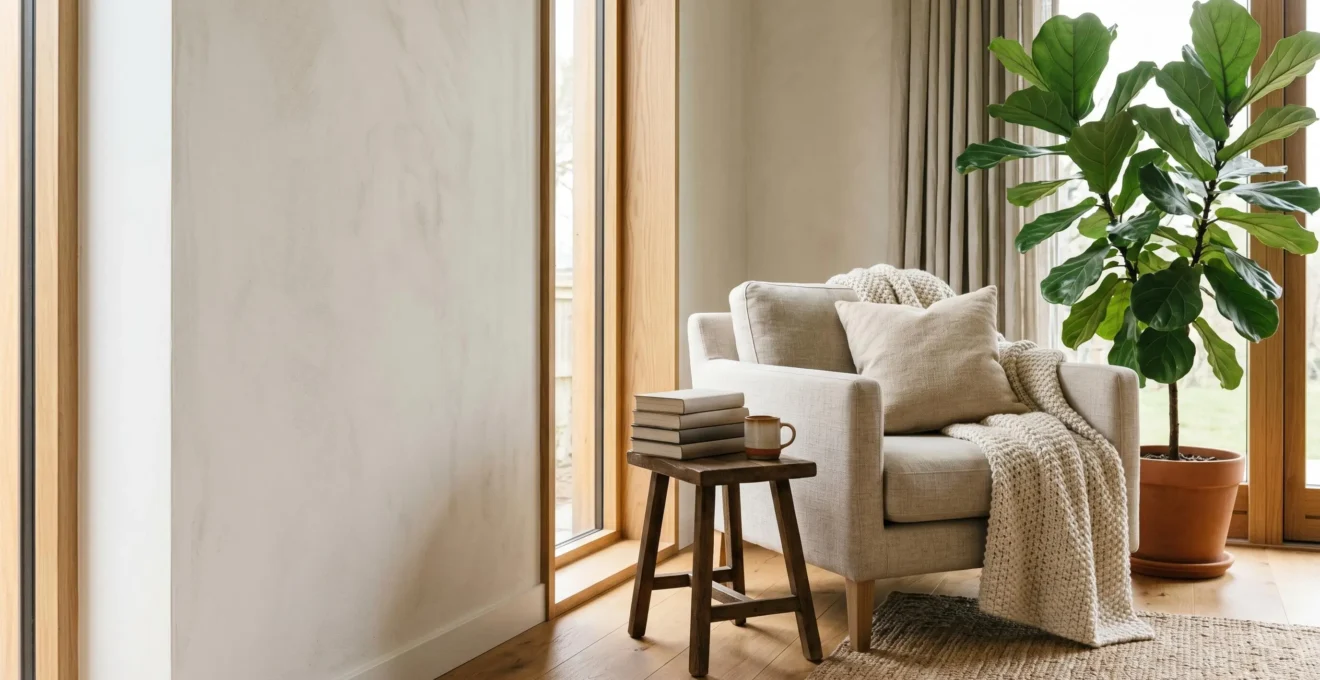
Creating a calm, screen-free home isn’t about winning a battle against devices; it’s about designing a sensory environment so inviting that real-world play becomes more compelling.
- Visual and auditory clutter significantly increases a child’s cognitive load, making screens an easy escape.
- Spaces offering proprioceptive input (cozy nooks) and biophilic elements (indoor plants) naturally regulate the nervous system.
Recommendation: Focus on creating ‘invitations’ to read, create, and rest, rather than simply enforcing ‘restrictions’ on technology.
As a sensory design specialist, I often meet parents at their wits’ end. You’ve tried setting timers, enforcing “no-device dinners,” and hiding the tablets, yet the magnetic pull of the screen seems to win every time. This battle is especially draining when you have a child prone to anxiety, for whom the digital world offers a predictable, albeit dysregulating, escape. The common advice focuses on restriction and control, but this often leads to power struggles and reinforces the screen’s status as a forbidden prize.
What if the solution wasn’t about fighting a war against technology, but about changing the landscape of the battlefield? The real key to reducing screen time is not to simply take things away, but to create an environment so rich, calming, and engaging that the real world becomes more appealing than the digital one. This is about creating sensory-supportive “invitations” for rest, creativity, and connection. It’s a shift from a mindset of restriction to one of intentional design.
In this guide, we won’t just list things to buy. We will explore the “why” behind creating these spaces, grounding each idea in the principles of sensory science. We’ll deconstruct how to design sanctuaries that calm an anxious child’s nervous system, starting with a cozy book nook and expanding to a holistic, tech-free family culture. We’ll learn how to reduce cognitive load, provide positive sensory input, and reclaim your home as a place for deep rest and play.
This article provides a blueprint for transforming key areas of your home into screen-free sanctuaries. Below, you will find a summary of the practical strategies we will cover, from crafting a perfect reading nook to using light to promote calm.
Summary: Building Your Screen-Free Sanctuaries
- The Book Nook: How to Make a Cozy Space That Invites Reading?
- Accessible Art: Why Leaving Supplies Out Encourages Creativity?
- Indoor Garden: Creating a Green Space for Tech-Free Calm
- Digital Detox Box: A Physical Box to Lock Phones Away
- Hygge Lighting: Using Lamps Instead of Screens for Evening Light
- The Time-In Space: How to Create a Safe Spot for Meltdowns?
- Visual Clutter: Does a Tidy Room Improve Homework Focus?
- Creating Tech-Free Zones: Reclaiming Family Spaces from Devices
The Book Nook: How to Make a Cozy Space That Invites Reading?
A book nook is more than a miniature library; it’s a sensory haven. For a child, especially one with anxiety, the world can feel vast and overwhelming. A well-designed nook offers a physical sense of enclosure and safety, which is profoundly calming for the nervous system. This isn’t just about being “cozy”—it’s about providing proprioceptive input. The gentle pressure from beanbags, cushions, or a weighted blanket sends signals to the brain that promote feelings of security and being grounded. This physical comfort makes it easier for a child’s mind to settle, wander, and immerse itself in a story.
The goal is to create an undeniable invitation to curl up and disconnect. Making books visually accessible is critical. Instead of spine-out on a high shelf, use low, front-facing displays where the vibrant covers act as their own advertisement. This removes barriers and sparks curiosity. Research confirms the power of these spaces; a study highlighted that dedicated reading spaces boost literacy development, imagination, and even long-term academic success. They are not just decorative but are functional tools for cognitive and emotional development.
To build this sanctuary, think in layers of texture and light. Soft rugs, plush pillows, and fuzzy blankets provide tactile comfort. Gentle, warm lighting, like fairy lights or a soft lamp, is far less stimulating than harsh overhead lights or the blue light of a screen. By curating these sensory elements, you’re not just encouraging reading; you’re designing a space that intrinsically reduces stress and makes quiet solitude feel like a gift.
- Create a cozy seat with bean bags, floor cushions, or child-sized comfortable seating to provide that calming, deep-pressure input.
- Display books with front-facing shelves, book rails, or baskets to make covers visible and inviting to a child.
- Add functional lighting with clip-on book lights, soft lamps, or fairy lights for ambiance, avoiding harsh overheads.
- Include soft textures like furry rugs, blankets, and pillows to enhance tactile comfort and create a sense of warmth.
- Define the space with a small canopy, a rug, or a low divider to signal it as a distinct, safe reading zone.
Accessible Art: Why Leaving Supplies Out Encourages Creativity?
For a child, an empty table is a question mark; a table with paper and crayons is an invitation. Leaving art supplies out and accessible is a powerful strategy in sensory design because it creates a “sensory affordance” for creativity. Instead of needing to ask for permission, find the hidden supplies, and set everything up—a process that can extinguish the fleeting spark of an idea—the child can act on their creative impulse immediately. This autonomy is incredibly empowering and fosters a sense of agency.
Many parents worry about the mess, and that’s a valid concern. However, it’s helpful to reframe our perspective on this. As one early childhood educator wisely puts it, mess is not a sign of chaos but of engagement. In an article for Stories of Play, they note:
Mess is part of all the wonderful learning that is happening when children are deep in their creative zone exploring and creating.
– Stories of Play educator, 13 Favourite Art Supplies for Toddlers That Encourage Creativity
This perspective shifts “mess” from a problem to be avoided to evidence of a mind at work. The key is managed accessibility. Use low shelves, clear containers, and a designated, protected surface (like a wipeable mat or a specific “art table”). This structure contains the creative explosion without stifling it. It teaches the child both freedom and responsibility, showing them that their creative drive is valued and has a dedicated place in the home.
By making these tools visible and reachable, you are sending a constant, passive message: “Your ideas are welcome here. You are a creator.” For a child who may struggle to articulate their feelings, art becomes a vital, non-verbal language. Providing the tools for that language without barriers is one of the most profound ways to support their emotional expression and well-being, making the allure of a passive screen fade in comparison.
Indoor Garden: Creating a Green Space for Tech-Free Calm
Bringing nature indoors is one of the most effective strategies for creating a calming sanctuary. This practice, known as biophilic design, is rooted in our innate human tendency to connect with nature. For a child’s developing nervous system, the presence of plants can have a profound regulatory effect. The simple act of watering a plant, touching its leaves, or watching it grow provides a mindful, sensory-rich experience that is the complete opposite of the fast-paced, stimulating digital world.
The scientific backing for this is strong. Gardening activities provide a gentle focus, reduce rumination, and promote a sense of purpose. For children with attention-related challenges, the benefits can be particularly striking. For example, activities carried out in green settings significantly reduce symptoms of ADHD in children, according to research. This effect is not limited to large outdoor gardens; even a small collection of indoor plants can create a micro-environment of calm. Caring for a living thing also teaches responsibility, patience, and the cycles of life and growth in a tangible way.
Case in Point: The Junior Master Gardener Program
Randy Seagraves, coordinator for the Junior Master Gardener program at Texas A&M, has witnessed this transformation firsthand. He regularly observes a near-instant change in a child’s demeanor upon entering a garden. They physically slow down, their focus shifts, and they begin to notice small details. The program shows that these green spaces are powerful environments for improving a child’s social, psychological, and cognitive well-being, offering a natural antidote to the overstimulation of modern life.
Creating an indoor garden doesn’t require a green thumb. Start with a few hardy, low-maintenance plants like snake plants, spider plants, or pothos. Involve your child in the process: let them choose the pots, help with the potting soil, and assign them the role of “plant caretaker.” This shared activity becomes another screen-free point of connection. This small patch of green becomes a quiet corner for observation and care, a living sanctuary that grows alongside your child.
Digital Detox Box: A Physical Box to Lock Phones Away
While creating positive invitations is the primary strategy, there are times when a clear, physical boundary is necessary to protect family connection. This is where the “Digital Detox Box” comes in. This isn’t a punishment; it’s a family ritual. It’s a simple, decorated box where, at designated times, everyone—parents included—places their devices. The act of physically putting the phone away creates a powerful psychological shift, signaling a transition from a state of digital distraction to one of present-moment awareness.
The need for such a ritual is clear. With startling data from the National Center for Health Statistics revealing that about half of children and teens logged four or more hours of daily screen time between 2021 and 2023, carving out device-free time is essential for mental health. The key to the detox box’s success is its collaborative, non-punitive nature. It’s not something parents “do to” their kids; it’s something the family “does together.” This models healthy technology habits and communicates that everyone benefits from being disconnected.
This shared commitment opens up space for what screens so often displace: spontaneous conversation, boredom-fueled creativity, and genuine connection. A Texas family’s experience highlights the profound impact of this simple habit.
‘I do it too! I don’t just make them,’ she explains. ‘When we all put our phones down, we all put our phones down.’ Once a month, the family spends a full weekend away from devices, creating opportunities for real conversations about school, worries, and happiness.
– Tabetha Koerth, Texas parent
By making the detox box a positive family routine—perhaps marking the start of dinner, family game night, or the weekend—it becomes a cherished ritual rather than a resented rule. It physically and symbolically reclaims family space from the intrusion of technology, making room for each other.
Hygge Lighting: Using Lamps Instead of Screens for Evening Light
Our bodies are intrinsically wired to respond to light. For millennia, the setting sun and the warm glow of firelight signaled to our nervous systems that it was time to wind down, rest, and connect. Today, the harsh, blue-toned light from screens hijacks this ancient system, sending a “daytime” signal to our brains precisely when they should be preparing for sleep. This is disruptive for everyone, but for a child with a sensitive or anxious nervous system, the effect is magnified.
This is why curating your home’s evening light is a cornerstone of sensory design. The Danish concept of “Hygge” (pronounced ‘hoo-gah’), which evokes a feeling of cozy contentment, places a huge emphasis on lighting. It’s about swapping out harsh overhead fixtures and bright screens for pools of warm, soft light. Think table lamps with fabric shades, floor lamps angled at a wall, salt lamps, or even candlelight (with supervision). The goal is to lower the overall light level and shift the color temperature from stimulating blue to calming amber and gold.
This isn’t just about aesthetics; it’s about biology. An abundance of research shows the negative impact of evening screen time on sleep. For instance, studies demonstrate that a one-hour increase in screen time is associated with reduced sleep duration and quality in children. By intentionally creating a “light-scape” that mimics a natural sunset, you are supporting your child’s circadian rhythm. This simple environmental shift helps their body produce melatonin, the sleep hormone, and allows their nervous system to transition naturally towards rest.
Make it a ritual. As evening approaches, turn off the main lights and switch on the “cozy lamps.” This act becomes a sensory cue for the whole family that the day is winding down. It creates a calm, intimate atmosphere that naturally encourages quieter activities like reading, talking, or listening to music, making the home a true sanctuary from the stimulating outside world.
The Time-In Space: How to Create a Safe Spot for Meltdowns?
When a child is overwhelmed, the traditional response is often a “time-out,” a method that can feel isolating and punitive, especially for an anxious child. From a sensory design perspective, a more effective approach is to create a “Time-In” space. This is not a place of punishment, but a pre-planned sanctuary where a child can go to feel safe and regulate their big emotions, either alone or with a trusted adult. It reframes the moment of crisis from one of isolation to one of co-regulation and support.
The design of this space is crucial. It should be located in a quiet, low-traffic area of the home and be filled with tools that help soothe a dysregulated nervous system. Unlike a stimulating playroom, a Time-In space is intentionally simple and calming. It’s about reducing sensory input, not adding to it. Soft lighting, comfortable seating like a large cushion or a small tent, and a few carefully chosen sensory tools are the key components. The goal is to provide a predictable, safe harbor that the child can retreat to *before* a full-blown meltdown occurs, or to recover within after one starts.
This space is also a place to build emotional literacy. By including tools like feelings charts or books about emotions, you give your child the vocabulary to understand and express what they are experiencing. It becomes a workshop for emotional intelligence. When a parent joins the child in this space, not to lecture but simply to be a calm, present anchor, it models co-regulation and reinforces the message: “You are not alone with your big feelings. I am here to help you through them.”
Action Plan: Building an Effective Time-In Space
- Assess the Sensory Environment: Identify a quiet corner. Use soft lighting (a dimmable lamp) and minimize visual and auditory distractions to create a calming baseline.
- Provide Supportive Seating: Inventory what you have. Can you use floor cushions, a small tent, or a beanbag? The seating should feel enclosing and supportive.
- Gather Emotional Literacy Tools: Collect or create visual aids. Print a “feelings wheel” or draw simple emotion faces to help your child identify and name their feelings.
- Select Sensory Tools: Find items that provide calming input. This could include a weighted lap pad, a soft blanket, stress balls, or a small container of kinetic sand for tactile release.
- Frame the Space’s Purpose: Have a family conversation. Explain that this is a “cozy corner” or “calm-down spot” for anyone who needs a peaceful moment, balancing its use for solo calm with opportunities for shared reading or quiet connection.
Visual Clutter: Does a Tidy Room Improve Homework Focus?
The common parental refrain to “clean your room” is often met with resistance, but it’s backed by neuroscience. A tidy, organized space absolutely improves focus, but not for the moralistic reasons we often assume. It’s about managing cognitive load—the amount of information your brain is trying to process at once. Every object in our visual field, from a pile of laundry to a stack of old drawings, sends a signal to our brain. For a child, whose executive functions are still developing, a cluttered room is a constant, low-level source of distraction that taxes their working memory.
Imagine trying to do a math problem in a room where a dozen different televisions are playing. That’s what a cluttered desk can feel like to a child’s brain. Each item competes for attention, making it incredibly difficult to dedicate mental resources to a single, focused task like homework. A screen, with its singular, bright point of focus, can feel like a welcome relief from this chaotic environment. Therefore, reducing visual clutter is not about enforcing tidiness for its own sake; it’s about creating an environment that supports deep focus and makes concentration easier.
The solution isn’t about creating a sterile, minimalist void. It’s about “a place for everything, and everything in its place.” Use simple, clear storage solutions like bins and boxes with picture labels. Implement a “one-task-out” rule for the homework area: only the items needed for the current assignment are on the desk. Everything else is put away, reducing the cognitive load and creating a clear runway for concentration.
This principle extends beyond the desk. A system for rotating toys—keeping a small selection out and storing the rest—can dramatically reduce visual noise in a playroom, encouraging deeper, more imaginative play with fewer items. By intentionally curating the visual environment, you are directly supporting your child’s ability to focus, making them less likely to seek the easy stimulation of a screen.
Key Takeaways
- Designing an environment that is more inviting than a screen is more effective than simply restricting technology.
- Sensory-informed spaces with cozy textures, warm lighting, and natural elements help regulate a child’s nervous system.
- Reducing visual clutter and providing organized access to creative materials supports focus and encourages autonomous play.
Creating Tech-Free Zones: Reclaiming Family Spaces from Devices
The strategies we’ve discussed—the book nook, the art station, the calming lighting—are powerful individual components. The final step is to integrate them into a holistic philosophy by designating entire areas of your home as permanent tech-free zones. This isn’t about dotting your house with “no phone” signs; it’s about proactively dedicating spaces to specific, screen-free purposes. The bedroom becomes a sanctuary for sleep and rest. The dining table becomes a hub for connection and conversation. The playroom becomes a lab for imagination.
When you formally designate a space as tech-free, you remove the need for constant negotiation. The rule is embedded in the environment itself. This clarity is especially calming for an anxious child, who thrives on predictability and clear boundaries. It reduces the mental effort required to decide whether or not to use a device in that space. As parenting research indicates, designating areas as screen-free zones creates natural places for connection and creativity without the negative feeling of restriction.
This is where all the pieces come together. A bedroom declared a tech-free zone is made more inviting with Hygge lighting and a cozy book nook. A dining table is reclaimed by making the Digital Detox Box a central part of the mealtime ritual. These zones work because you have already laid the groundwork, filling them with appealing, sensory-rich alternatives. The absence of the screen is not an empty void; it’s an opportunity for the activities you’ve intentionally designed the space to host.
Start small with one or two key zones. The two most impactful are often the bedroom and the dining table. Communicate the “why” to your family: these are sacred spaces for rest and connection, and protecting them is a shared goal. By reclaiming these physical territories from the digital world, you are making a powerful statement about your family’s values and creating a home that nurtures well-being by design.
By shifting your focus from managing devices to designing your environment, you can create a home that is a true sanctuary. It becomes a place that naturally calms, connects, and inspires your child, empowering them with the tools for rest and resilience that will last a lifetime. To put these principles into practice, the next logical step is to perform a sensory audit of your own home to identify opportunities for creating these positive invitations.