It’s a common belief that teaching critical thinking means asking lots of questions. But the real shift happens when you, the parent, stop being an answer-provider and start becoming a co-explorer. This guide moves beyond simple tips to offer a philosophical toolkit, reframing your role into that of a facilitator in a ‘community of inquiry’ at home. You’ll learn not just to prompt your child, but to model a life of curiosity, explore multiple possibilities together, and value the process of wondering over the destination of knowing.
As a parent, you’ve likely felt that flicker of concern. You ask your bright, curious preschooler about their day, and you get a one-word answer. You see them absorbing content on a screen and wonder what’s really going in. You want more for them than just the ability to recite facts; you want them to have a questioning mind, to think independently, and to navigate the world with thoughtful confidence. You want them to be a thinker, not just an obeyer. This is a common and deeply important parental desire.
The standard advice often involves flashcards, educational apps, or a constant barrage of “What’s that?” and “What color is this?” While well-intentioned, this approach can inadvertently turn learning into a test, a performance where there is always a ‘right’ answer. It positions you as the teacher and them as the student, a dynamic that can stifle the very curiosity we aim to nurture. We are told to encourage questioning, but we are rarely taught how to build an environment where questions can truly flourish.
But what if the key wasn’t in the tools we give our children, but in the environment we create with them? As a Philosophy for Children (P4C) teacher, I’ve seen that the most profound learning happens not when we provide answers, but when we join children in their wondering. The secret is to shift your role from ‘Director of Knowledge’ to ‘Chief Facilitator of Curiosity’. It’s about building a small ‘community of inquiry’ right in your living room, where exploring ideas together is the main event. It’s less about teaching logic and more about making thinking a joyful, shared activity.
This article will guide you through eight practical, philosophical tools to help you build this foundation. We will explore how to transform everyday conversations, playtime, and even screen time into powerful opportunities for developing a truly critical and independent mind. You’ll learn how to value the process, celebrate the questions, and ultimately, raise a little philosopher.
To navigate this exploration, we’ve structured our guide into distinct, actionable strategies. Each section tackles a core component of critical thinking, offering practical ways to integrate these philosophical habits into your family life. The following summary outlines the key concepts we’ll be building upon.
Summary: The Parent’s Guide to Cultivating a Questioning Mind
- Open-Ended Questions: Why “Why” and “How” Are Better Than “What”?
- The “Maybe” Game: Exploring Multiple Possibilities for One Answer
- Fake News for Kids: How to Teach Them Not to Believe Everything on YouTube?
- The “I Wonder” Approach: Modeling Curiosity Instead of Giving Answers
- Theory of Mind: Helping Kids Understand Others Have Different Thoughts
- The Hypothesis: “What Do You Think Will Happen If…?”
- Influencer Audit: Checking Who Your Child Follows and Why?
- Teaching the Scientific Method Through Kitchen Chaos
Open-Ended Questions: Why “Why” and “How” Are Better Than “What”?
We’re often told to ask “open-ended questions,” but what does that truly mean in practice? The distinction is philosophical. A “what” question—”What color is the car?”—is a test. It has one right answer, and its purpose is to verify known information. It closes a loop. In contrast, “why” and “how” questions—”Why do you think the car is red?” or “How could we make this tower taller?”—are invitations. They open a space for speculation, imagination, and reasoning. There is no single correct answer; the value is in the process of thinking itself.
By prioritizing “why” and “how,” you shift the dynamic from an interrogation to a shared exploration. You are communicating that you are more interested in their unique thought process than in their ability to recall a fact. This simple change is fundamental to building a community of inquiry. It tells your child: “Your ideas matter. Your reasoning is interesting to me.” This is the first step in nurturing the confidence to think independently. It transforms mundane moments into opportunities for connection and cognitive growth, valuing the journey of the thought, not just its destination.
To start integrating this, focus on turning “what” questions into “why” or “how” prompts. Instead of “What did you build?”, try “Tell me about what you built.” This small change invites a narrative rather than a label. According to early learning specialists, using a variety of these prompts is key. A valuable resource from the Illinois Early Learning Project suggests several powerful starters to encourage deeper conversation and reasoning skills in young children.
Ultimately, the goal is not to stop asking “what” questions entirely, but to ensure they are balanced with a healthy dose of “why” and “how” to keep the doors of curiosity wide open. This practice lays the groundwork for more complex reasoning as your child grows.
The “Maybe” Game: Exploring Multiple Possibilities for One Answer
One of the biggest hurdles to critical thinking is the fear of being wrong. From a young age, children learn that questions in a learning context usually have a single, correct answer. The “Maybe” Game is a powerful philosophical tool to dismantle this pressure. It’s a simple, playful practice that teaches cognitive flexibility—the ability to hold multiple possibilities in mind at once. The game can be played anywhere, anytime. You see a dog barking. The question isn’t “Why is the dog barking?” but rather, “What are all the possible reasons the dog might be barking?”
The first answer might be simple: “He wants a treat.” You respond with, “That’s a good one! Maybe he wants a treat. What else could it be? Maybe he sees a squirrel?” Another child might add, “Maybe he’s singing a song!” In the “Maybe” game, all ideas are welcome, from the plausible to the fantastical. The point is not to find the “real” reason but to generate a web of possibilities. This exercise validates creativity and teaches children that a single event can have multiple interpretations. It’s a direct antidote to black-and-white thinking.
This game is a direct application of counterfactual thinking, which is the ability to imagine different outcomes or scenarios. It’s the engine of creativity and a cornerstone of problem-solving. By playing the “Maybe” game, you are exercising this mental muscle in a low-stakes, joyful way, showing that thinking and imagining are one and the same.
As you can see in the act of storytelling, a child naturally explores different paths and outcomes. The “Maybe” game simply provides a light structure to this innate human capacity for imagination. It turns a simple observation into a launchpad for collaborative world-building and philosophical exploration. It reinforces the idea that not knowing the “right” answer is not a failure, but an exciting opportunity to explore.
Over time, this practice cultivates an open-mindedness and a comfort with ambiguity, which are essential traits for any critical thinker navigating a complex world full of uncertainties.
Fake News for Kids: How to Teach Them Not to Believe Everything on YouTube?
In a world of endless scrolling and algorithm-driven content, even our preschoolers are exposed to a firehose of information, much of it of questionable quality. The challenge isn’t just to limit screen time—though experts recommend limiting it to one hour per day of high-quality content for children aged 2 to 5—but to equip them with the foundational skills of media literacy. For a preschooler, this doesn’t mean dissecting sources, but learning a much more fundamental concept: “Things on the screen are made by people, and people can make things that look real but aren’t.”
Start with simple, tangible examples. Use the magic of video editing on your own phone. Record a video of a toy sitting on a table, then stop, move the toy, and record again. Show them the “magical” video where the toy teleported. Then, reveal the secret. This isn’t about disillusionment; it’s about empowerment. You are giving them a peek behind the curtain, teaching them the difference between reality and representation. This concept is the first building block of understanding that content has an author with an intent.
When watching together, ask gentle, probing questions. “That’s a silly video! Do you think that could really happen in our house?” or “I wonder who made this video. What do you think they wanted us to feel? Happy? Excited?” This isn’t an interrogation, but a shared “I wonder” moment. You are modeling a critical stance without inducing cynicism. The goal is to cultivate a healthy skepticism and the habit of asking “How do I know this is true?”—a question that will serve them for a lifetime.
Case Study: Digital Literacy Programs for Preschoolers
Can young children truly learn media literacy? A 2025 study published in the Journal of Media Psychology provides a hopeful answer. Researchers found that a digital training program, which children could largely navigate on their own, was highly effective. It significantly improved preschoolers’ ability to recognize and critically interpret media symbols and content, demonstrating that it is never too early to start building these crucial 21st-century skills in an age-appropriate way.
By making the ‘how’ of media creation transparent and discussing the ‘why’ behind content, you are planting the seeds of digital citizenship and critical consumption, turning passive viewers into active, questioning thinkers.
The “I Wonder” Approach: Modeling Curiosity Instead of Giving Answers
Of all the tools in a parent’s toolkit, perhaps the most powerful and underutilized is the simple phrase: “I wonder…” When a child asks a difficult question—”Why is the sky blue?”—our first instinct is often to scramble for the correct, scientific answer. But in a community of inquiry, the goal isn’t to be an encyclopedia. The “I Wonder” approach flips the script. Instead of providing the answer, you join them in their curiosity. Responding with “Hmm, I wonder about that too. What are your first thoughts?” does two crucial things.
First, it validates their question as an interesting and worthy topic of thought, rather than a problem to be solved and dismissed. Second, it models the single most important trait of a critical thinker: epistemic humility, or the comfort of not knowing. By saying “I don’t know, let’s think about it together,” you demonstrate that learning is a lifelong process of inquiry, not a finite set of facts to be memorized. You show them that adults are still curious, still exploring, and still comfortable with uncertainty. This is a profound lesson.
This modeling goes beyond just responding to their questions. It’s about verbalizing your own curiosity throughout the day. “I wonder why those birds are all flying in the same direction.” “I wonder how they get the cream inside this donut.” You are performing your own thinking process out loud, making the invisible act of curiosity visible and tangible. As the educational team at Bright Horizons notes, this kind of modeling is central to a child’s development.
Children learn from observing how you think and watching how you respond.
– Bright Horizons Educational Team, Bright Horizons Critical Thinking Development Guide
This practice costs nothing and requires no special equipment, yet it is one of the most effective ways to cultivate a household culture where curiosity is the default setting and thinking is a shared adventure.
Theory of Mind: Helping Kids Understand Others Have Different Thoughts
One of the most significant cognitive leaps in early childhood is the development of “Theory of Mind”—the understanding that other people have their own thoughts, feelings, beliefs, and desires, which may be different from one’s own. This isn’t an abstract psychological concept; it’s the very foundation of empathy, social negotiation, and complex critical thinking. A child who can grasp that someone might hold a false belief (the classic “Sally-Anne” test) has unlocked a new level of social and intellectual understanding.
Nurturing this skill doesn’t require drills or flashcards. It happens best through stories and imaginative play. When you read a book together, pause and ask perspective-taking questions. “How do you think that character is feeling right now?” “He looks happy, but do you think he might be pretending?” “Why did the wolf do that? Do you think he believed he was doing the right thing?” These questions encourage your child to step outside their own perspective and try on another’s. This is a core ‘thinking move’ in philosophy.
According to extensive research on social cognition development, this ability blossoms between ages 3 and 5. At age 3, children begin to understand different wants and feelings, and by 4 or 5, they can grasp that people can have different, and even wrong, beliefs. Your role is to provide a rich environment for this skill to practice and grow. Pretend play is a perfect laboratory. When you take on roles (“You be the doctor, I’ll be the patient with a tummy ache!”), you are explicitly practicing Theory of Mind, exploring different viewpoints in a safe, fun context.
Case Study: Storytelling and Perspective-Taking
A groundbreaking 2024 study demonstrated how oral storytelling can be a powerful engine for critical thinking in preschoolers. The “Storythinking Programme” involved 17 children aged 3-5 and used adult-scaffolded storytelling and peer discussions. The results were clear: by engaging in narrative exploration and perspective-taking exercises, children as young as 3 showed significant development in their ability to understand different viewpoints and engage in critical thought.
By consistently inviting your child to consider the “minds” of others, whether they are fictional characters or family members, you are giving them an essential tool for navigating the social world and for building more sophisticated, nuanced arguments of their own.
The Hypothesis: “What Do You Think Will Happen If…?”
The question “What do you think will happen if…?” is the gateway to scientific thinking. It takes a child’s natural impulse to act (“I’m going to push this!”) and inserts a crucial moment of cognitive reflection. This pause is where a simple action transforms into an experiment. It’s the moment of hypothesis formation. A hypothesis isn’t just a random guess; it’s a prediction based on prior knowledge, however limited it may be. When you ask this question, you are inviting your child to consult their internal model of how the world works and make a reasoned prediction.
The beauty of this tool is its universal applicability. You can use it at the playground: “What do you think will happen if you try to climb up the slide?” You can use it in the kitchen: “What do you think will happen if we add another egg to the pancake batter?” The outcome is secondary. The primary goal is the act of predicting and then observing. This process teaches a fundamental lesson of scientific inquiry: our ideas are testable.
Crucially, you must celebrate all predictions, especially the wrong ones. If a child predicts a tower will stand and it falls, this is not a failure. It’s a “surprising discovery!” Your response should be one of excitement: “Wow, that’s not what I expected! What did we see? Why do you think it fell?” An incorrect hypothesis that is tested often teaches more than a correct one because it forces a revision of our mental model. It’s the moment we learn the most.
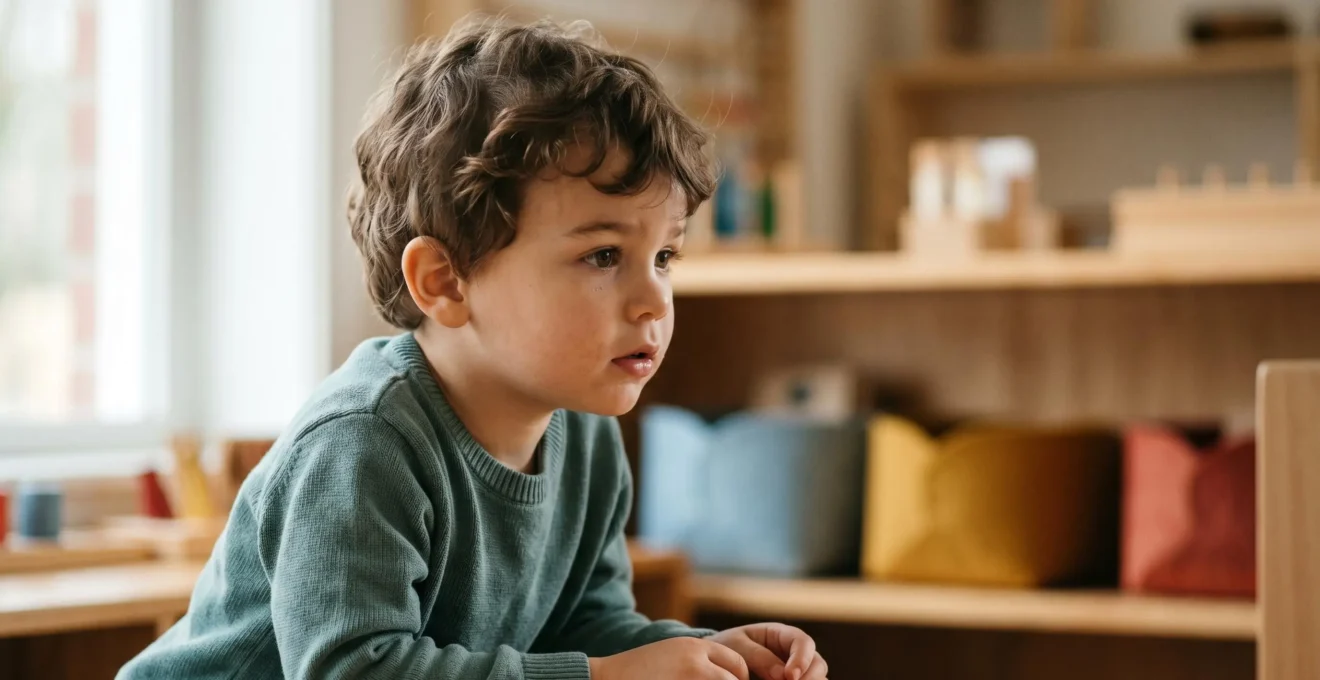
That look of focused anticipation, of a mind running a simulation of the future, is the very picture of intellectual engagement. By asking “What do you think will happen if…?”, you are inviting your child into this state of deep, playful concentration. You are showing them that their thoughts about the future matter and that they have the power to test those thoughts against reality.
By framing everyday actions as small experiments, you are cultivating the mindset of a scientist: curious, predictive, and open to being surprised by the results.
Influencer Audit: Checking Who Your Child Follows and Why?
In the past, the “characters” in a child’s life were limited to family, teachers, and figures from books or television. Today, they also include a vast and often unvetted cast of YouTube personalities and digital influencers. Just as we would want to know who their real-life friends are, it’s essential to understand the digital ‘friends’ and role models they are engaging with. An “Influencer Audit” is not about spying, but about co-viewing and opening a dialogue, applying critical thinking to the world of digital personalities.
The audit starts with simple questions rooted in co-viewing. Sit with them for a few minutes and ask with genuine curiosity: “Tell me about this person. What do you like about them?” or “They seem really fun! What makes them a good friend in the video?” These questions shift the focus from the passive consumption of content to an active analysis of character and values. You are using their interest as a springboard to discuss what makes someone a good role model, a kind person, or an interesting creator. This is a modern-day application of Socratic questioning.
This conversation allows you to assess the quality of the content they are consuming and gently guide them. Not all digital content is created equal. Some content is like “digital vegetables”—nutritious and designed to help you grow. Other content is “digital candy”—fun in small doses but lacking in substance and often designed to be addictive. A recent framework helps parents distinguish between these types.
| Content Type | Educational Value | Red Flags | Parent Strategy |
|---|---|---|---|
| Educational Screen Activities (Digital Vegetables) | Online classes, video calls, educational robots – support literacy and learning | Excessive passive viewing without interaction | Co-view and discuss content, ask open-ended questions |
| Entertainment Content (Digital Candy) | Limited educational value – TikTok, funny videos, pure entertainment | Over-stimulation, commercial intent, addictive design patterns | Strict time limits, discuss intent behind content |
| Character-Driven Shows | Can teach social skills and values if quality content | Heavy merchandising tie-ins, stereotypical behaviors | Ask: Why do you like this character? What makes them a good friend? |
As this analysis from a recent psychology study shows, the parent’s strategy is always one of active engagement. By discussing the characters and content, you are not just monitoring, you are teaching them to be discerning critics of the media they consume.
This shared audit helps them develop a critical filter, empowering them to make better choices and understand the ‘why’ behind the content they love, a skill that will only become more vital as they grow.
Key Takeaways
- Shift your role from ‘answer-provider’ to ‘curiosity-facilitator’ in a shared ‘community of inquiry’.
- Model your own thinking process aloud; verbalize “I wonder…” and “I’m not sure, let’s find out” to normalize curiosity.
- Use play and everyday moments as a laboratory for ideas, testing hypotheses, and exploring different perspectives together.
Teaching the Scientific Method Through Kitchen Chaos
There is no better laboratory for a young scientist than the kitchen. It’s a sensory-rich environment filled with opportunities for observation, prediction, and experimentation. Baking a cake or mixing dough is not just a domestic chore; it’s a chemistry experiment in disguise. By consciously applying the steps of the scientific method—in a playful, child-friendly way—you can transform “kitchen chaos” into a profound learning experience that brings all our philosophical tools together.
It begins with a question (“I wonder what will happen if we use salt instead of sugar?”). This leads to a hypothesis (“My brain thinks it will taste yucky!”). Then comes the test—the most exciting part. The key here is to embrace the process, not the outcome. The ‘experiment’ might not result in an edible product, but it will always result in learning. As you work, you prompt for observation (“What does it smell like? How does the texture feel in your hands?”). You are training their senses to be data-collection tools.
The final, and most important, step is telling the story of what you learned. “Remember when we tried adding salt? That was a surprising discovery! We learned that even though salt and sugar look the same, they have very different effects.” This reframes ‘mistakes’ as valuable data points. The kitchen, with its inherent messiness and transformative processes, is the perfect place to demonstrate that learning is often a chaotic but wonderful process of trial and error. It is the ultimate community of inquiry, where you and your child can be co-investigators in the delicious science of everyday life.
Your Action Plan: The 5 Steps of Kitchen Science
- The Question (I wonder…) – Encourage children to express curiosity about what they observe in everyday activities, like cooking or baking.
- The Guess (My brain thinks…) – Help children make predictions before testing, asking them to explain their reasoning, even if it’s imaginative.
- The Test (Let’s try it!) – Conduct simple experiments while emphasizing the One Change Rule: try to change only one variable at a time for a clearer result.
- The Observation (What are my eyes/nose/hands telling me?) – Prompt children to use all five senses to collect data about what happens during the experiment.
- The Story (What did we learn?) – Reflect together on the results, celebrating interesting mistakes as surprising discoveries rather than as failures.
Start today by embracing the beautiful mess of one shared “I wonder…” moment in the kitchen. The journey to raising a critical thinker isn’t a race to the right answer, but a slow, wonderful walk down the path of curiosity.